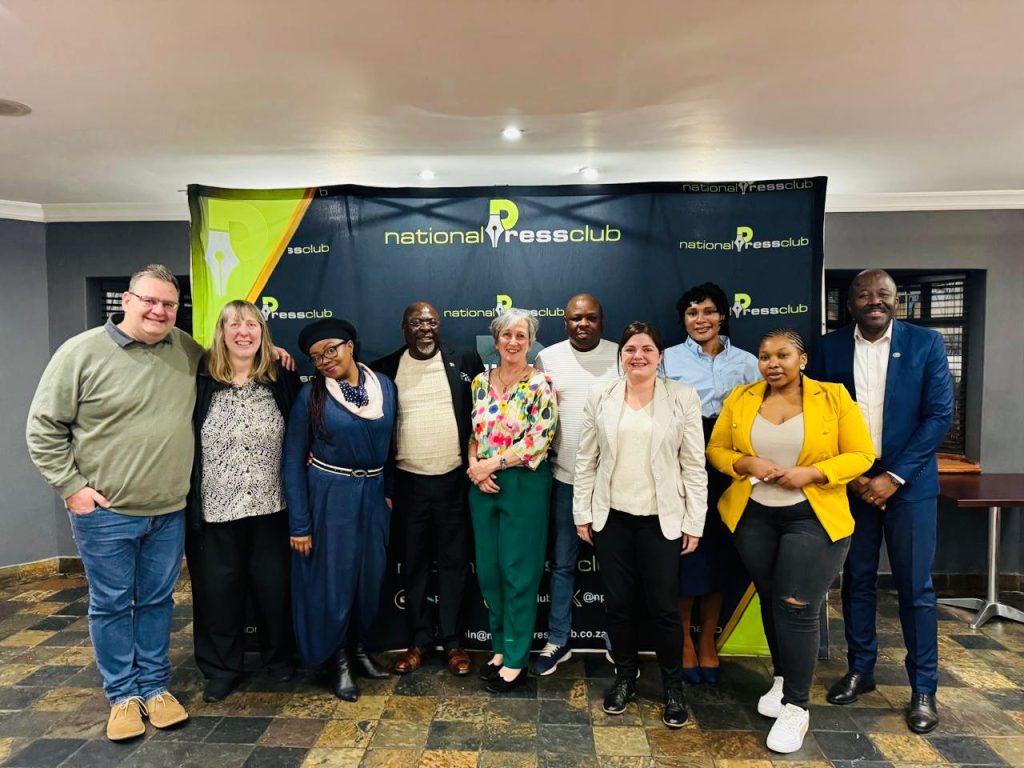
Tuesday 8 July 2025, Pretoria. The Association for the Protection of Road Accident Victims (APRAV) has voiced strong opposition to the reintroduction of the Road Accident Benefits Scheme (RABS)—a Bill previously rejected multiple times by Parliament due to its unconstitutional limitations, unaffordable structure, and impractical design.
“You can’t fix a broken system by stripping away rights. RABS is not reform—it’s regression,” says Ngoako Mohlaloga, APRAV Deputy Chair.
APRAV’s response follows COSATU’s recent public support for RABS, which the trade union federation called a progressive measure aimed at protecting the poor. But APRAV warns that RABS will do the opposite: deny victims access to justice, limit financial support, and overwhelm an already dysfunctional Road Accident Fund (RAF). “This Bill offers less money, fewer rights, and no path to challenge the system when it fails you,” adds Pieter de Bruyn, APRAV Chairperson. “If implemented, it will turn the RAF from a safety net into a bureaucratic trap.” No More Lump Sums—Just Dependency Under RABS, road accident victims will no longer receive once-off compensation. Instead, they’ll receive monthly annuities—regardless of the severity of injury or loss of income.
These payments are:
• Capped, even for high-earning breadwinners
• Terminated immediately if the victim dies
• Subject to budget cuts or administrative reassessment
“You can’t pay for trauma surgeries, prosthetics, or settle urgent debt with a few thousand rand a month,” says de Bruyn. “RABS shifts the financial burden to victims when they’re at their most vulnerable.” No Court Access, No Legal Support RABS removes the right of victims to take their case to court or to access legal assistance. The system places full administrative control in the hands of the RAF, leaving victims with no way to challenge underpayments, delays, or rejections. “It’s a closed loop,” says Ngoako Mohlaloga, APRAV Deputy Chair. “Victims will be trapped in a system they can’t fight, even when it fails them completely.” Reckless Drivers Get Paid Too By introducing a no-fault model, RABS ensures that even negligent or intoxicated drivers can qualify for compensation. It erases accountability and creates a system vulnerable to fraud, while victims receive reduced and delayed payouts.
Entire Groups Will Be Excluded RABS will also exclude:
• Children over 18 who lose a parent
• Elderly victims over the age of 60
• Foreign nationals—even if they contribute to the fuel levy
• Informal workers, caregivers, and those not formally employed APRAV calls this a system of exclusion—not protection.
“If your 19-year-old son depends on you and you’re killed in a crash, he will get nothing,” says Mohlaloga. “If you’re a foreign nurse who pays fuel tax, you’re still excluded. It’s unjust.” The System Cannot Handle What RABS Demands The current RAF already struggles to settle claims within the required 120-day period. RABS will require it to process and deliver 1.5 million monthly payments per year—a feat for which no infrastructure currently exists.
APRAV’s Alternative: Real Reform, Already Ready APRAV has presented Parliament with a 10-point evidence-based action plan that:
• Saves over R4.8 billion a year
• Establishes Settlement Hub and RAF Specialist Tribunals
• Improves claim turnaround time
• Retains legal recourse for victims
• Fixes administrative blockages
• Requires minor practical changes to existing legislation
“You don’t tear down the foundation when the house needs fixing,” says de Bruyn. “You fix the cracks. That’s what APRAV’s plan does.”
Join the Movement: Let Victims Be Heard APRAV is calling for:
• An urgent pause on the revival of RABS
• A transparent, public engagement process
• An audience with the Minister of Transport
• A seat at the decision-making table for victims and those who advocate for them APRAV invites legal practitioners, medical professionals, civil society organisations, victims, and ordinary South Africans to rally behind this cause.
Send your support, stories, and submissions to: victims@aprav.co.za Let’s ensure that those who have suffered on our roads are not locked out of the very system designed to protect them. “Before rewriting the future of road crash compensation, government must listen to the people it will impact most,” says Mohlaloga. “Let the victims be heard.”
An intense cold front is expected to make landfall on Wednesday, 25 June 2025, over the south-western parts of South Africa, bringing a significant shift in weather conditions across the region. Read the full address by the South African Weather Service’s Head of Disaster Risk Reduction, Mr Rudzani Malala, during a National Press Club media briefing on Monday, 23 June 2025 in Pretoria.
It is with a huge honour for me to be addressing you the members of the media and South Africans as the new South African Social Security Agency (SASSA), Chief Executive Officer.
It is an honour that comes with enormous responsibility and expectations to lead an organization of this high magnitude that distributes social grants to millions of beneficiaries.
This is a task that I do not take lightly, and I want to extend my appreciation to the Minister of Social Development, Ms Nokuzola Sisisi Tolashe and the entire cabinet led by President Matamela Cyril Ramaphosa for the humbling confidence.
This is a responsibility that I have accepted with heartfelt humility, mindful of the stiff road ahead but equal to the task at hand to steer SASSA in the right direction to meet the expectations.
With my 13 years’ experience as the Regional Executive Manager in SASSA, I have succeeded in executing the mandate of the agency at few provinces including having acquired the necessary knowledge of the expectation of our clients
As I step into the role of SASSA CEO, my role becomes different now, and fortunately we have developed and tabled the Strategic Plan and Annual performance Plan of SASSA for the next Five years (2025 2030) and Three years respectively.
SASSA’s mandate is rooted in South Africa’s Constitution and guided by the Social Assistance Act No.13 of 2004 (“Social Assistance Act”) and the South African Social Security Agency Act No. 9 of 2004 (“SASSA Act”), which mandate the agency to provide social assistance to eligible citizens.
Our strategy is aligned to national priorities, particularly the Medium-Term Development (MTDP:2024-2029), and the National Development Plan (“NDP”) 2030, aimed at poverty reduction and social inclusion. The work of the Agency contributes directly to the MTDP priority “To reduce poverty and tackle the high cost of living” led by the National Department of Social Development. Through our strategic plan, we have outlined three key strategic outcomes namely;
Reducing Level of Poverty
Improve Customer Experience
Improving Organisational efficiency
We came with these strategic outcomes, after having acknowledged the South African wide challenges which influence the need for social assistance, these include:
The slow economic growth,
High levels of poverty,
High unemployment rate,
Disasters that affect people living in South Africa.
Similarly, we are working tirelessly to arrest the elements of fraud and corruption in our systems, these include cases of identity theft compromising our cyber security and other corrupt activities involving our staff.
SASSA has recently had to deal with the swapping of gold cards to Postbank Black cards. The Agency pays more than 19 million social grants monthly, of these, about 3 million beneficiaries were paid through the Post bank accounts. Reserve Bank has granted an extension for the 980 000 beneficiaries who still need to swap their cards.
SASSA’s focus in the medium term will include:
Increase coverage of social assistance to older people, people with disabilities and children who are unable to support themselves.
Provide temporary reprieve to individuals and families experiencing temporary distress to meet their basics needs whilst they are addressing their temporary challenges.
Educate beneficiaries on SASSA services through community outreach programmes and improved communication strategy.
Invest in systems that will enable migration from manual business process to automated systems, introduced self-application channel
Leveraging technology to improve service delivery and managing fraud.
Exploring and implementing alternative service delivery models both on alternative payment and applications.
Improve Organisational efficiency that include, Modernisation of the SASSA call Centre, strengthen supply chain management and clean audit.
We note that there have been some officials that have tainted the image of SASSA by involving themselves in unscrupulous activities.
SASSA, under the leadership of Minister Tolashe has zero tolerance for fraud and corrupt activities and the Minister has given us marching orders to deal with these elements decisively.
We will be implementing lifestyle audits, financial disclosures for every official and if there are officials who insatiable thirst to steal from the public purse, we are coming for you.
We have completed engagement with unions regarding the implementation of a much-awaited Biometric enrolment verification system which will assist in fraud prevention in the system, and we have piloted these in some of our offices in provinces already.
I must indicate that since acting in the position, activated our community engagement, rolled out our communication strategy where we reached all corners of the country. We also engaged staff members in six of our provinces to ensure that they understand the direction in which the organization is taking and more importantly to listen to the new ideas.
We will be engaging all our stakeholders going forward to foster collaborative efforts that will ensure that we will reach all our set objectives.
I thank you
MINISTER NOKUZOLA TOLASHE REPORT:
The 2024 General Elections results have brought a new reality and served as a litmus test on the strength and maturity of South Africa’s democracy as it did not give one party a majority, but entrusted it with various political parties.
We pride ourselves with our leaders through their maturity who were able to form a Government of National Unity. As it is said to reflect the wishes of South Africans who went all out to cast their votes, and it is up to us as the elected public representatives to navigate through these unchartered waters and serve our people to the best of our abilities.
When President Cyril Ramaphosa announced an inclusive team of Members of the Executive Committee and appointed me to head the Ministry of Social Development, he paired me with Deputy Minister Ganief Hendricks, who is a tried and tested leader in his own right. We come from different schools of thought and political backgrounds however, what brings us together is our love for the people of South Africa and a vision for their prosperity.
We are given such a huge responsibility that seeks to deal with the fundamental challenges that our country faces. In the center of that is changing the lives of the poor to their betterment and deal decisively with all other social ills facing our communities at large. In the implementation of our mandate our immediate task was to engage the executive level of management in the department, its entities and the various stakeholders of the Department of Social Development, to familiarize ourselves with issues that needed our immediate attention and intervention.
In the current financial year, we have identified the following priorities:
Stabilization of the department and its entities
We have tabled the Basic Income Supportdraft policy proposal to the Social Cluster Forum and Cabinet structures
Prioritised Gender Based Violence (shelters + psychosocial support services)provision and reestablishment of GBV Command Centre.
Fast-tracking the employment of Social Workers to address social behavioural change challenges and rising social illsin partnership with the Departments of Basic Education, Justice, Correctional Service, Police and Defence.
To deal decisively with Alcohol and Drugs Abuse, with a specific focus on Children and youth
To develop a Framework on Disaster Management
Youth and Gender empowerment through skills development and job creation especially through social entrepreneurship and EPWP – looking at the social and solidarity economy.
Strengthening Care and Protection measures of Children, the Elderly and People with Disability
To comply with the NPO Act, continue with the deregistration of non-compliant Non-profit organisations is continuing.
Launch a digitized NPO registration platform, to reduce the burden of NPOs to submit reports.
Strengthening partnerships to augment the shrinking resources of the state, and to maximize the impact of available resources.
Ladies and gentlemen, it gives us great pleasure to confirm that we have processed and concluded the appointment of the Director General, the Deputy Director General for Welfare Services and Chief Financial Officer, and the appointment of the CEO of SASSA as part of my undertaking to stabilise the leadership of the Department and its entities. With the Cabinet concurrence, we are grateful as it confirms we are on the right track as DSD. We have also concluded the process of appointing most of the vacant Regional Executive Managers of SASSA.
We are also pleased that the Minister of Finance has heeded our plea for the continuation of the R370 social relief of distress to enable us to finalise a more long term solution to the challenge of poverty among our working age population. As required by law, we have published the draft regulations for the continuation of this provision on Wednesday 26 March 2025.
We have tabled and got the full approval for the Older Person Amendment Bill at the NCOP, and we received the support of all the nine (9) Provinces of South Africa. The Bill has gone to the National Assembly for ratification, and thereafter to the President for signing and promulgation into Law.
The department convened a three-day Symposium on Financial Action Task Force (FATF) Recommendation 8 on NPOs.
The Symposium was convened to facilitate multi-stakeholder such as Civil Society and other government department engagement on strengthening South Africa’s compliance with global anti-money laundering (AML) and counter-terrorism financing (CFT) standards under the theme “Together-Countering the Financing of Terrorism in the NPO Sector– Promoting cooperation and compliance with the global standards.”
This symposium provided a platform to discuss mechanisms and strategies to improve collaboration between the government and other stakeholders in application of CFT measures in a manner that negatively impact the operations of the NPO Sector.
Engagements with the South African Social Security Agency (SASSA) have taken different forms over the last couple of months in office, and we have taken some of the challenges faced by the entity head-on in a very transparent manner. Every undertaking to engage with the matters at hand has been followed through. SASSA pays over 19 million social grants every month. Two million, nine hundred and eighty four thousands and four hundred (2,984,400) beneficiaries were paid through the Post bank accounts. SASSA has recently had to deal with the swapping of gold card to Postbank Black cards. I am great full to the Reserve Bank when SASSA communicated with them requesting an extension so as to cater for the 980 000 beneficiaries to swap their cards, they have granted the extension. At this point we request the beneficiaries to continue with the swapping of cards, don’t wait until it is too late.
The National Development Agency has been strengthened by the deployment of a Senior Executive from the Department of Social Development as an Acting CEO and we held fruitful engagements with the National Development Agency Board. The NDA has hosted a very successful two day conference with CSOs where a sample of the work done by CSOs was displayed representing all provinces.
As of part of the Social welfare implementation programmes, we hosted a successful golden games, which created a platform for the Aged to have active aging where all 9 provinces brought participants. We have also held dialogues among children in the country where they have drafted their own declaration about the interventions to be taken to fight against child abuse and as a result have drafted and proposed pillar 7 on the National Strategic Plan on fighting GBVF in the country.
We have also hosted the African Children’s Summit in collaboration with the Nelson Mandela Children’s Fund. Ladies and Gentlemen I am happy to inform you that, the recent Africa Children’s Summit was successful because the children produced the Outcome Statement which expressed their views on matters affecting them. This includes the importance for African Member States that ratified the African Charter on the Rights and Welfare of the Child. The Outcome Statement was subsequently, after the Summit, presented before the African Committee of Experts on the Rights and Welfare of the Child in Lesotho. The Committee resolved to encourage all Member States to initiate Child Participation programs. South Africa is continuously enhancing the voices of children on matters affecting them. We will be having roadshows to begin the process of advocating for Child participation in the country.
In this regard we have launched the Child Protection month as part of the 365 days program in Thaba Nchu in the Free State Province with close collaboration with Her Royal Highness Kgosi Gauboilelwe Boo Seleka and the Provincial Government of the Free State represented by its Premier and MEC of DSD. We continue with the Child Protection this week until the closure on Sunday.
Ladies and Gentlemen of the Media, Government is highly concerned with the continued scourge of Violence against women and Children in our country. In demonstration of the government’s commitment in ending violence against children, the President, declared Gender Based Violence and Femicide as a second pandemic to Covid 19, further to this, the President made an urgent call to Cabinet to implement a 90-Days strategy with impactful programmes to address violence against women and children.
In response to the President’s directive to Cabinet, The Justice ,Crime Prevention and Security (JCPS) Cluster Ministers and senior officials convened a special sitting on the 14 of April 2025.
It culminated in the adoption of 90 day acceleration programme to intensify the national response and fast track the implementation of the National Strategic Plan on GBVF. A dedicated GBVF Priority committee has been established within the National Joint Operational and Intelligence Structure ( NATJOINTS)
The brutal killing of Olorato and other senseless killings of women and children is disturbing. We are encouraged by the swift arrests that have taken place, I hope the last suspect will be caught alive so that they can be able to explain why they did this to an innocent soul. We are also encouraged by the Life sentencing given to Joslin Smith’s Mother, her accomplice and the order given by the Judge that their names to be included in the Child Protection Register, as it also protects the other surviving siblings of Joslin Smith.
We are also encouraged by the Life Sentence given for the Brutal Murder of Sibongile Mankayi by Lelethu Matheza in Eastern Cape. We are encouraged by these life sentences as they send a strong message to future perpetrators that the Justice system will not be lenient on you for taking an innocent life and we hope it will go a long way to deter people from.
Ladies and Gentlemen of the media and fellow South Africans, it gives great pleasure and honor to introduce to you the Department of Social Development Mr. Peter Netshipale and the Chief Executive Officer of SASSA Mr. Themba Matlou, I wish them all the best In their new responsibilities and I am very grateful to them and their families for offering themselves to serve the people of South Africa. Let me take this opportunity to thank you the initiators of this initiative and the leaders of this entity, I thank you